
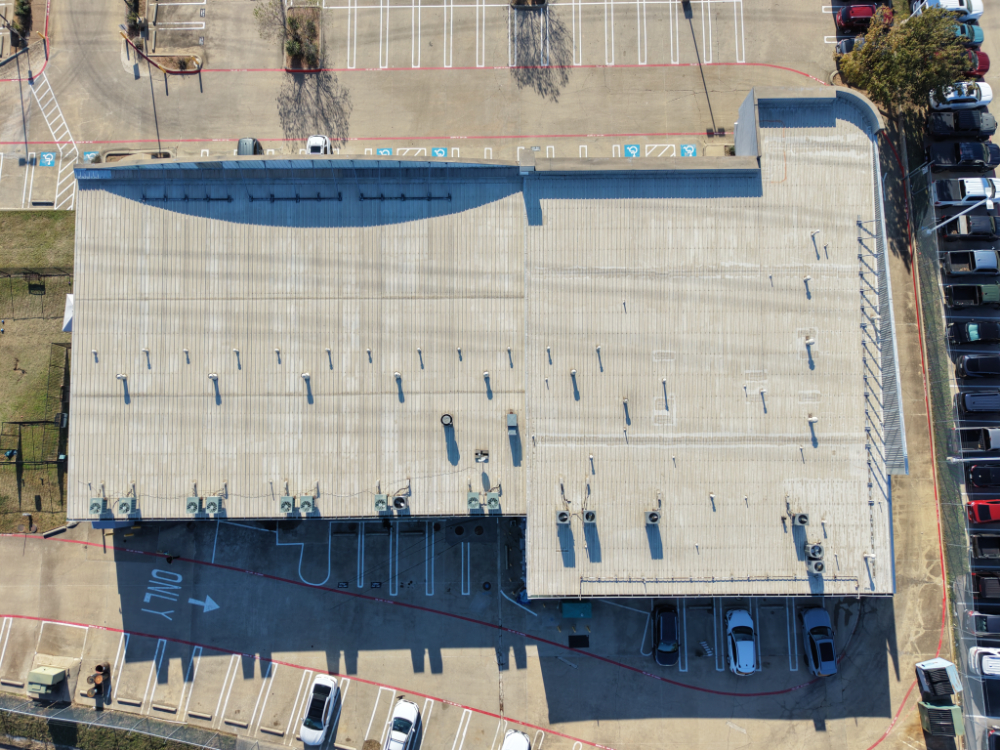
Commercial roof replacement
Commercial roof replacement, planned around your business.
When a commercial roof has reached the end of its useful life, the goal is a new system that fits the building, the budget and the way you operate — installed with as little disruption as possible.
Signs it's time
How to tell a roof is done, not just tired.
Replacement is a big decision, and it should be based on what is actually happening on the roof. We start every commercial roof replacement conversation with a full look at the existing system and photos of what we find.
If the roof turns out to have more life in it, we will tell you, and commercial roof repair or a roof coating may be the better route for now.
- 01
Leaks that keep moving
Each repair stops one leak and another starts somewhere else. That usually points to a membrane wearing out across the whole roof.
- 02
Wet insulation
Water trapped under the membrane soaks insulation, adds weight, reduces its value and can damage the deck below.
- 03
Widespread seam or membrane failure
Open seams, shrinkage, cracking and brittleness across large areas rather than isolated spots.
- 04
Deck or structural concerns
Soft spots, rusted metal deck or sagging areas that need to be addressed before any new roof goes on.
System options
The right system depends on the building.
There is no single best commercial roof. The right choice depends on the roof's slope and structure, what sits on it, how much foot traffic it gets, what the building is used for and how long you plan to own it. We install five main system types and will explain the honest trade-offs of each for your building.
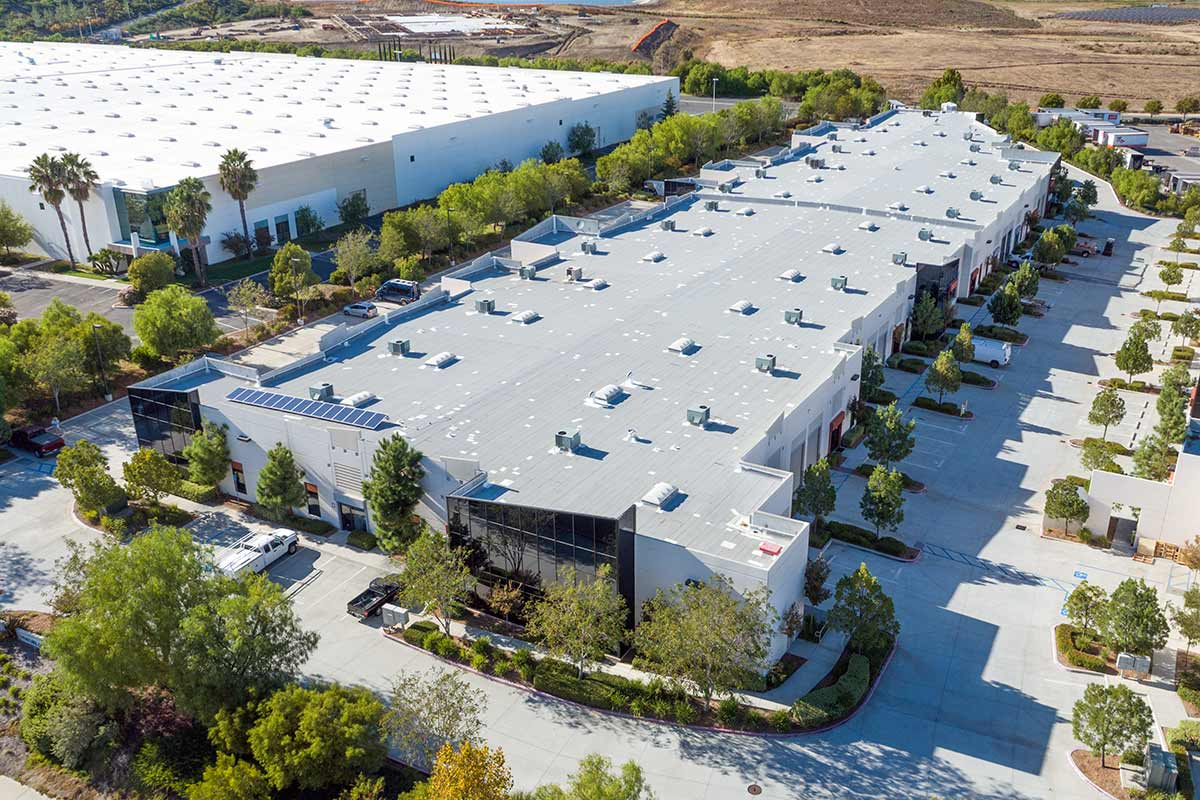
TPO is a white, heat-welded single-ply membrane and one of the most common choices for warehouses, retail and offices in Texas. It reflects sun well and has strong welded seams. Read more on our TPO roofing page.
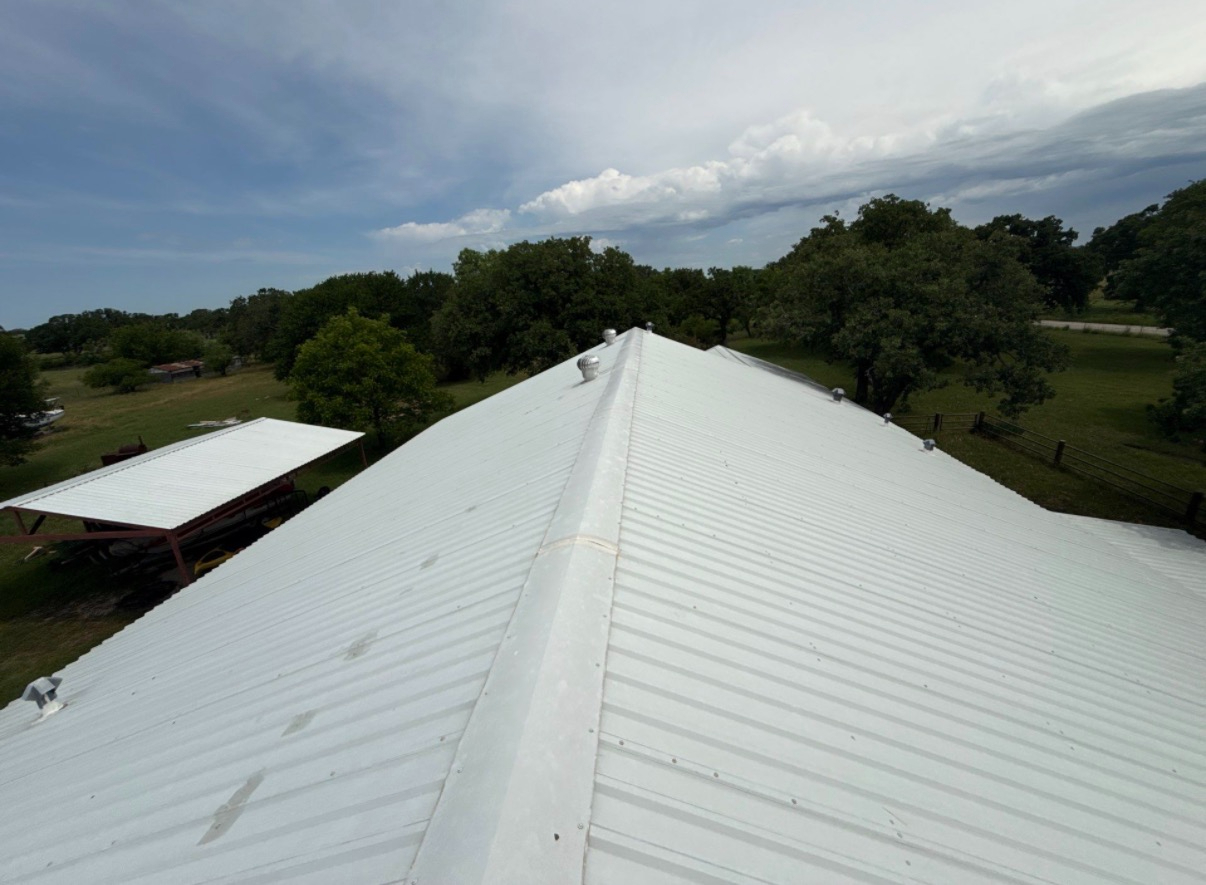
PVC is also heat-welded and handles grease and chemical exposure well, which makes it a common pick for restaurants and buildings with rooftop exhaust. EPDM is a durable rubber membrane with a long track record on low-slope roofs. Modified bitumen is a multi-layer asphalt-based system that stands up well to foot traffic. Commercial metal roofing suits steeper commercial roofs, shops, agricultural and industrial buildings.
Older gravel roofs
Replacing an old gravel built-up roof.
Many older commercial buildings in North Texas still have gravel-surfaced built-up roofs. Golden Rule does not install or repair gravel built-up roofs. What we can do is remove an aging gravel roof and replace it with a modern system — typically TPO, PVC, EPDM or modified bitumen — that is lighter, easier to inspect and easier to maintain.
Tear-off of a gravel roof takes planning. We look at how much weight and debris will come off, how it will be removed from the roof and hauled away, and what condition the deck is in once the old layers are gone. You will know the plan before work starts.
Our process
From assessment to final walkthrough.
First, we assess the existing roof — membrane, insulation, deck, drainage, flashings and rooftop equipment — and document it with photos. Then we sit down with you and walk through what we found, the system options that fit, and how the project would be scheduled.
Once scope and materials are confirmed, we schedule the work, stage materials and equipment, and keep the site clean throughout. We remove the old roof in sections so the building is never left exposed longer than necessary, install the new system and flash every wall, curb and penetration. At the end, we walk the finished roof with you.
On commercial projects, your 3-year Longevity Maintenance Package then kicks in — scheduled inspections and preventive maintenance to protect your investment. See our commercial roof maintenance page for more.
Minimal disruption
Keeping tenants and operations running.
A roof replacement shouldn't shut your business down. Before work starts, we talk through your hours, deliveries, parking, entrances and any sensitive areas inside, then plan staging, crane or lift placement and work zones around them. Building owners and property managers get a clear schedule they can share with tenants.
During the project you can call or text Elliot directly with questions, and we keep the work area and the ground around the building clean each day. If weather moves the schedule, you will hear about it from us before it becomes a surprise.
If your replacement follows hail or wind damage, see our commercial storm restoration process. You file the claim with your carrier; we handle the roofing process from start to finish and can be on site when the adjuster inspects. For the bigger picture of what we do, visit commercial roofing.
Common questions
Straight answers.
How long does a commercial roof replacement take?
It depends on the size of the roof, the system, how many layers are coming off and the weather. We give you a schedule after we have assessed the roof, and we keep you updated if weather moves it.
Can my business stay open during the replacement?
In most cases, yes. We plan work zones, staging and access around your hours, tenants and deliveries, and we remove and replace the roof in sections so the building isn't left exposed.
Do you install new gravel built-up roofs?
No. Golden Rule does not install or repair gravel built-up roofs. We can remove an older gravel roof and replace it with TPO, PVC, EPDM, modified bitumen or metal, depending on what fits the building.
Which roof system is best for my building?
It depends on slope, structure, rooftop equipment, foot traffic, what the building is used for and how long you plan to own it. We explain the honest pros and cons of each option for your building rather than pushing one system.
Does insurance pay for a commercial roof replacement?
That depends on your policy and your carrier. If storm damage is involved, you file the claim with your carrier. We document the roof, can be on site when your adjuster inspects, and handle the roofing work once scope is agreed.
Planning a commercial re-roof?
Call or text and we'll start with a full assessment of the roof you have now.