Commercial roof coatings & restoration
Commercial roof coatings: restore what's still sound.
A coating can give a weathered but structurally sound commercial roof a new surface without a full tear-off. It isn't right for every roof — here's how to tell.
What a coating is
A fluid-applied layer over the roof you already have.
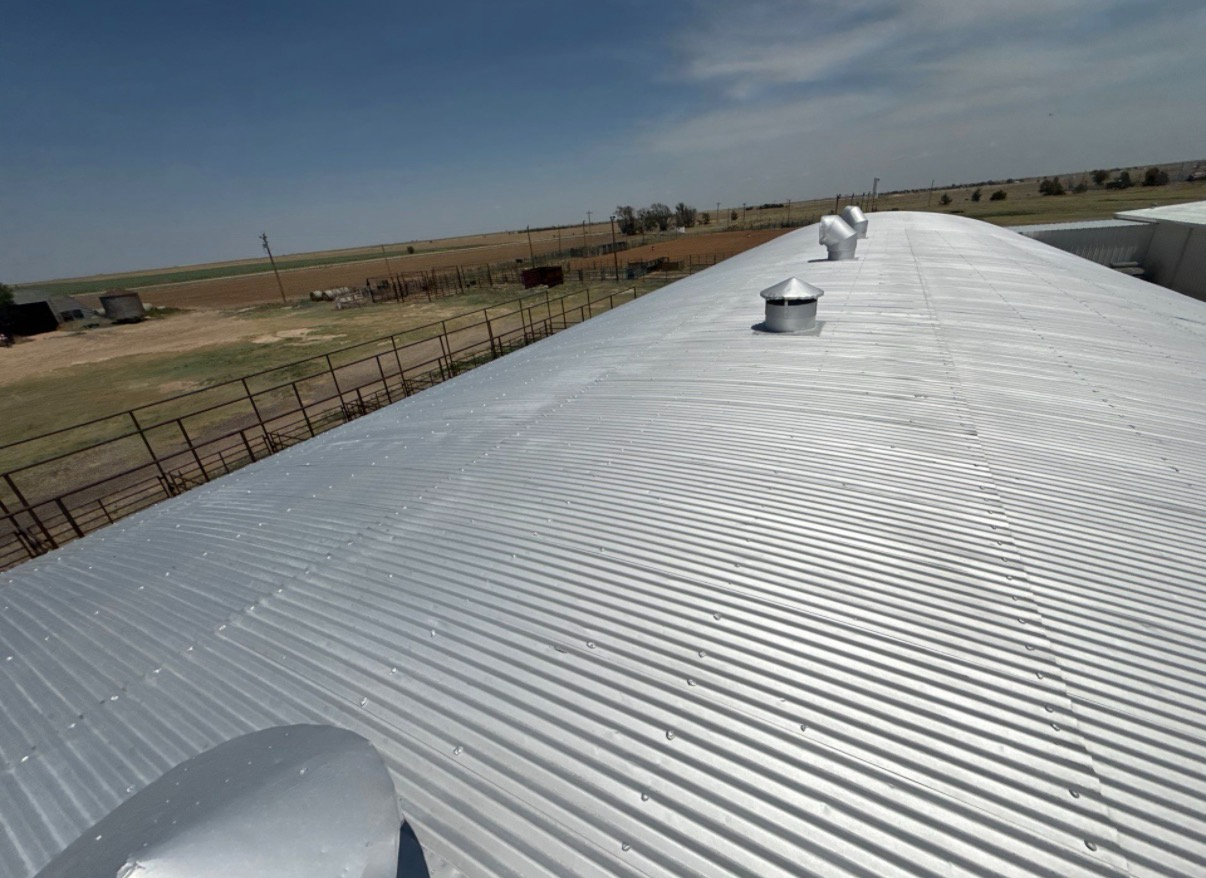
A commercial roof coating is a liquid applied over an existing roof — usually by spray or roller — that cures into a continuous, seamless membrane. Done properly, it renews the weathering surface, seals small cracks and seams, and reflects sunlight away from the building.
Commercial roof restoration is the broader process around the coating: inspecting the roof, removing wet areas, repairing seams, flashings and penetrations, cleaning and priming, and then applying the coating system. The coating is only as good as the roof and the preparation underneath it.
Because a restoration keeps the existing roof in place, it can mean less disruption to the building and less material sent to the landfill compared to a full tear-off — when the roof is a good candidate.
Coating types
Common coating types, at a glance.
Different coatings suit different roofs and conditions. We'll recommend a type based on your existing roof, how water drains and how the roof is used. Here's a general overview — not a sales pitch for any one product.
- 01
Silicone
Handles ponding water and UV exposure well, which is why it's often used on flat roofs. It can be slippery when wet, and later recoats usually need to be silicone as well.
- 02
Acrylic
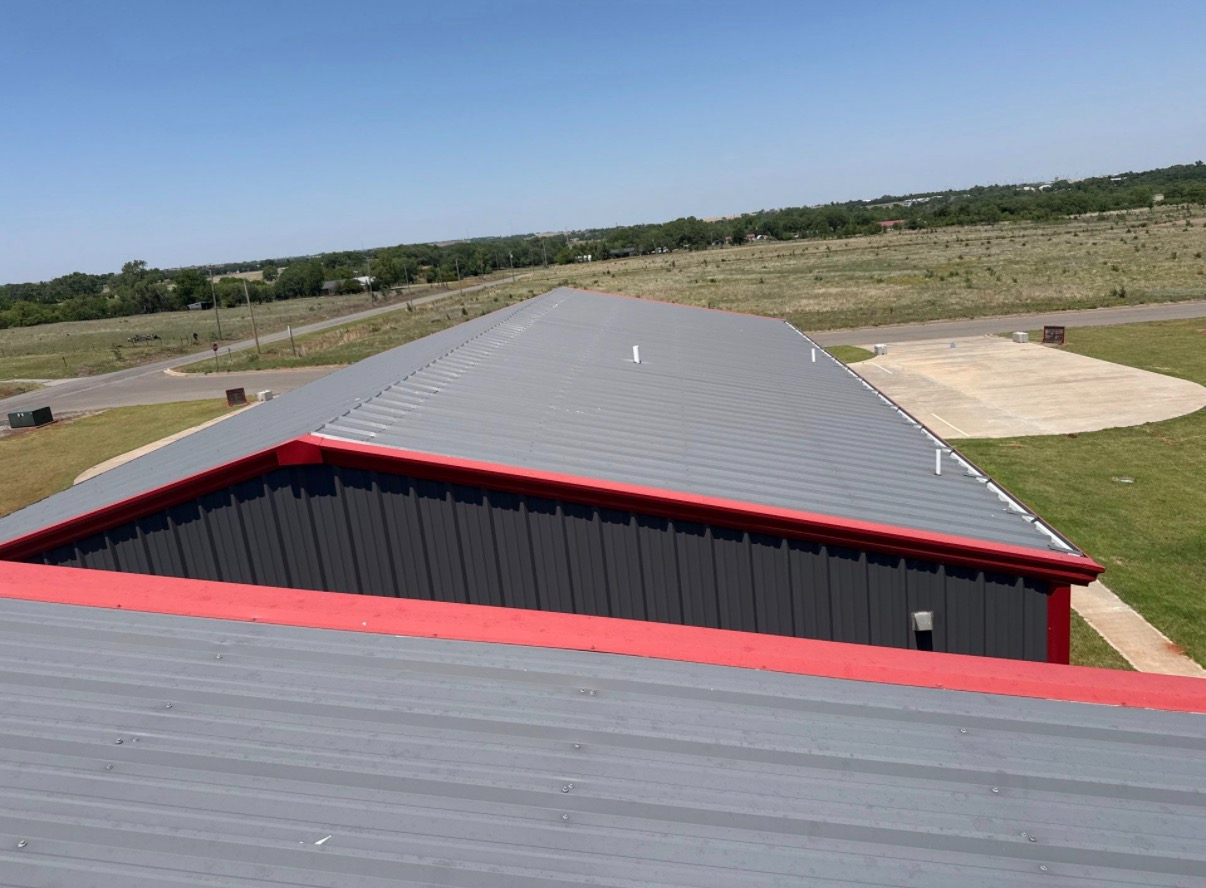
Water-based, typically bright white and reflective, and widely used on metal and sloped roofs. Not well suited to areas where water stands for long periods.
- 03
Other systems
Urethane and other specialty coatings offer toughness and impact resistance in high-traffic areas, often as a base layer under a top coat.
Good candidates
When a roof is a good coating candidate — and when it isn't.
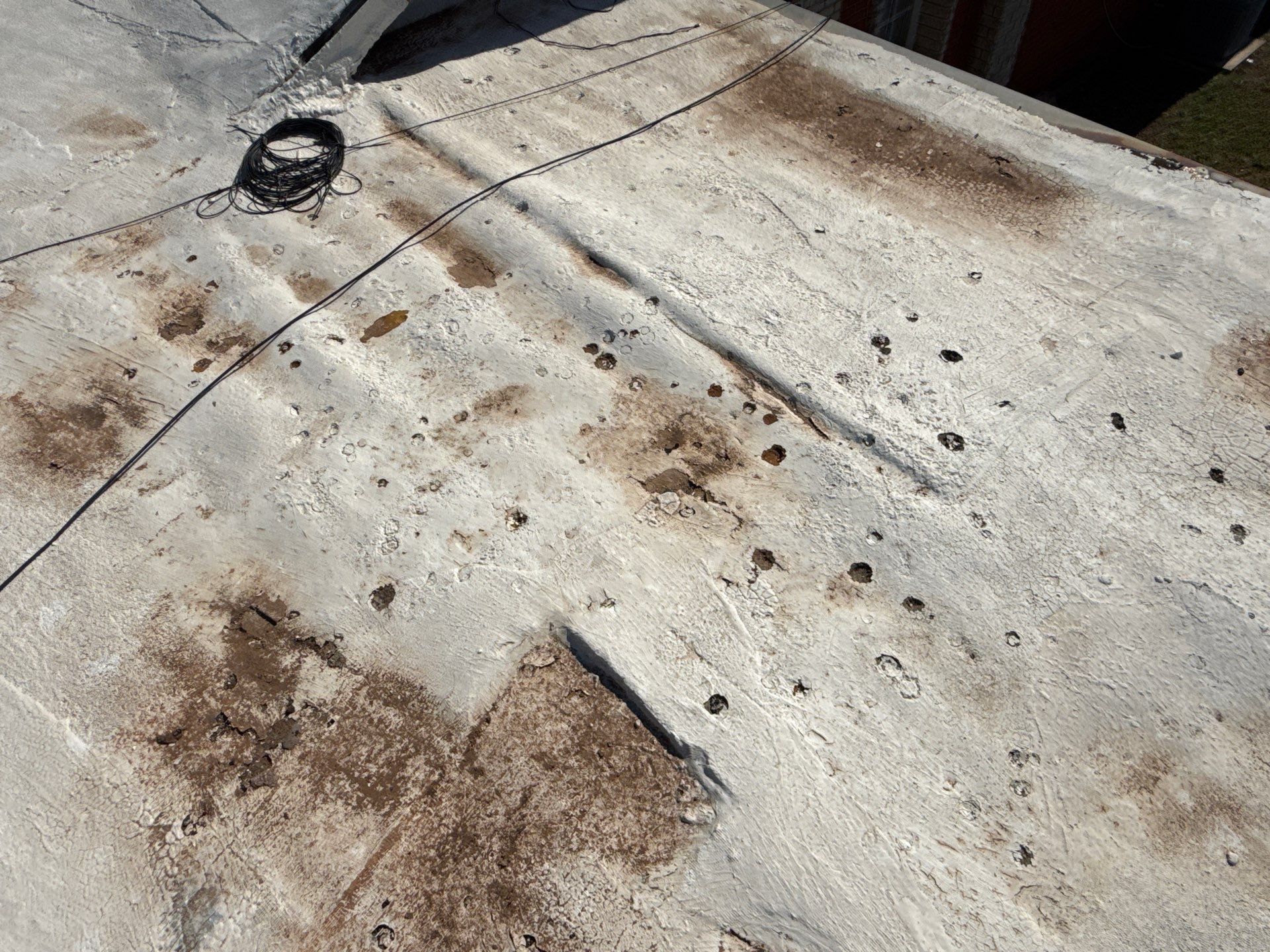
The single most important question is whether the roof underneath is still dry and sound. A coating seals the surface; it doesn't fix wet insulation, a failing deck or a roof that is coming apart. Coating over those problems just hides them for a while.
Good candidates are typically roofs that are weathered on the surface but still well attached and mostly dry — such as aging TPO, EPDM, modified bitumen or commercial metal roofs with rust limited to the surface, loose fasteners and tired seams.
Poor candidates include roofs with widespread wet insulation, significant deck damage, membranes that are shrinking or pulling away, or areas of heavy ponding that the chosen coating can't handle. We also don't coat gravel-top built-up roofs — those are better replaced with a modern system.
A commercial roof inspection is how we find out which side of that line your roof is on.
Restoration vs replacement
An honest look at the trade-offs.
Restoration usually means less tear-off, less disruption and a faster project. Replacement means starting fresh with new insulation and a new membrane, and it's the right call when the existing roof has failed beyond the surface. Our commercial roof replacement page covers that path, including system options like TPO roofing.
We'll give you a straight recommendation based on what the roof actually looks like, with photos to back it up. If the roof isn't a good candidate for a coating, we'll tell you — even if a coating would be the smaller job.
Our process
How a commercial roof restoration runs.
We start with a full assessment and documentation. Wet or damaged areas are cut out and replaced, seams, flashings and penetrations are repaired — see commercial roof repair — and the roof is cleaned and primed as needed for the coating system. Then the coating is applied to the specified thickness, with extra attention at seams, edges and details.
A coated roof still needs routine attention to keep performing — see commercial roof maintenance. If hail recently came through, start with our commercial storm restoration process; you file any claim with your carrier, and we handle the roof and can be on site when your adjuster inspects. For the full range of what we do, visit commercial roofing.
Common questions
Straight answers.
What is a commercial roof coating?
A liquid applied over an existing commercial roof that cures into a seamless membrane. It renews the weathered surface, seals small cracks and seams, and reflects sunlight.
Is my roof a good candidate for a coating?
Usually if the roof is weathered on the surface but still well attached and mostly dry underneath. Roofs with widespread wet insulation, deck damage or failing membrane are better candidates for repair or replacement. An inspection tells us which.
Silicone or acrylic — which is better?
Neither is better everywhere. Silicone tends to handle ponding water and UV well on flat roofs; acrylic is widely used on metal and sloped roofs where water drains off. We recommend based on your roof.
Can you coat a gravel roof?
No. We don't coat, install or repair gravel-top built-up roofs. We can replace an older gravel roof with a modern system such as TPO, PVC, EPDM or modified bitumen.
Is restoration cheaper than replacement?
Restoration often involves less tear-off and disruption, but the right answer depends on the condition of the roof. We'll give you an honest recommendation with photos so you can compare options.
Wondering if your roof can be restored?
Call or text and we'll inspect it and give you an honest answer.